Give Credit Where It's Due: The Unspoken Rules of Compensating Everyone Who Touches Your Music
Here's a question worth sitting with: when someone streams your latest single, whose work are they actually hearing?
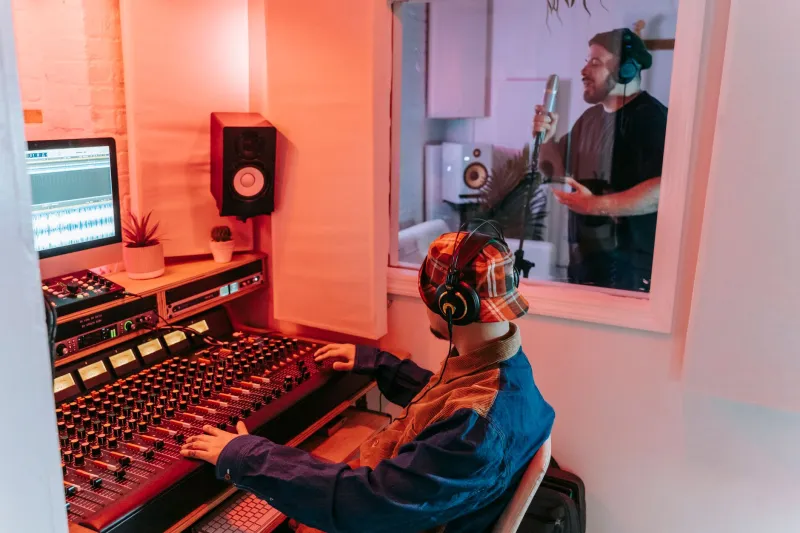
Yours, obviously. But also your mixing engineer's. Your producer's. Maybe the session drummer who laid down a groove you built everything around. Possibly a sample clearance specialist who saved you from a lawsuit you didn't even know was coming. The answer is almost always messier—and more collaborative—than the solo artist credit at the top of a streaming page suggests.
For independent artists in the US, this is one of those conversations that tends to happen too late, if it happens at all. You finish a project, you're exhausted and excited, and the business side of who gets what feels like a problem for future you. But future you is going to wish past you had sorted this out. Let's talk about how.
Who's Actually in the Room (Even When They're Not)
The obvious collaborators are easy to name: your co-writers, your featured artists, your producer. But the less visible contributors are where things get murky.
Mixing and mastering engineers, for instance, often work on a flat-fee basis—which sounds clean until you realize that some of them are shaping the emotional DNA of your record. A great mixer isn't just balancing frequencies; they're making decisions about what the listener feels. Whether or not that earns them a backend royalty split is a conversation worth having upfront, not after the record blows up.
Session musicians are another category that gets complicated fast. In the US, the American Federation of Musicians (AFM) has established rate structures for session work, but plenty of indie artists work outside those frameworks entirely. That's not inherently wrong, but it does mean you need to be deliberate about what you're offering and why.
And then there are the people operating even further behind the scenes: the sample clearance consultants who navigate the legal labyrinth of interpolation and replay, the vocal producers who coach your performance into something releasable, the A&R-adjacent advisors who help you figure out what the project even is before you start recording. These roles don't always come with standard rate cards, which makes the conversation both more necessary and more awkward.
The Credit Conversation Nobody Wants to Have
Here's the thing about attribution: it costs you nothing to give it, and it costs you a lot to withhold it.
Proper credits on streaming platforms—through services like Spotify for Artists or via metadata standards set by organizations like the Recording Academy's P&E Wing—aren't just about fairness. They're about building a reputation as someone who's good to work with. In an industry that runs on relationships and word-of-mouth, being known as the artist who actually credits their collaborators is a genuine competitive advantage.
For US-based artists, the practical starting point is your metadata. Every song you distribute should include accurate songwriter credits (filed with your PRO—ASCAP, BMI, or SESAC), producer credits, and mixing/mastering credits at minimum. Tools like DistroKid, TuneCore, and CD Baby have made this more accessible than ever, but you have to actually fill in the fields.
Beyond metadata, liner notes still matter—especially if you're releasing physical product or a Bandcamp page with download options. A detailed credits section signals professionalism and respect. It also helps the people who worked with you get discovered by the next artist looking for exactly what they bring to a project.
Building Payment Structures That Don't Blow Up Later
Fair compensation is harder to standardize than credit, but there are frameworks that work.
For producers, the industry norm in independent spaces often involves a combination of an upfront beat lease or purchase fee plus a negotiated royalty split on backend earnings. The split percentages vary wildly—anywhere from 20% to 50% depending on the producer's contribution and profile—but the key is getting it in writing before you start, not after the song is finished.
For mixing engineers, flat fees are common and often appropriate. But if you're working with someone whose contribution is genuinely transformative, a small royalty point or a credit-plus-fee arrangement is worth floating. The worst they can say is no.
For session musicians, consider whether you're hiring for a one-time contribution or an ongoing creative relationship. If it's the latter, the compensation structure should reflect that. Recurring contributors to your sound—the bassist who plays on every record, the harmony vocalist who defines your aesthetic—probably deserve more than a one-time Venmo.
And for the less conventional contributors? Write it down anyway. A simple email thread confirming the terms of your arrangement is better than a handshake and a prayer.
Why This Makes the Work Better, Not Just More Fair
There's a practical argument here that goes beyond ethics: artists who treat their collaborators well make better music.
When a mixing engineer knows they're going to be credited and fairly compensated, they bring more of themselves to the work. When a session musician feels like a genuine contributor rather than a hired hand, the performance reflects that. The transactional version of collaboration produces transactional results. The equitable version produces something closer to art.
This is especially true for independent artists who are building something long-term. Your network is your infrastructure. The producer you pay fairly today is the one who calls you first when they have a placement opportunity next year. The engineer you credit properly is the one who recommends you to their other clients. The creative ecosystem you build around yourself is only as strong as the trust you put into it.
A Simple Starting Framework
If you're not sure where to begin, here's a practical starting point:
Before you start a project: Have a direct conversation with every contributor about what they're getting—upfront payment, royalty split, credit, or some combination. Write it down, even informally.
When you're distributing: Fill in every metadata field your distributor offers. Register your splits with SoundExchange if you're earning digital performance royalties. File your songwriter credits with your PRO.
When you're releasing: Include a full credits section wherever your music lives. Tag your collaborators on social media when you're promoting the work. Let their contribution be visible.
After release: If the project earns more than expected, revisit whether the original compensation was actually fair. Not every deal needs to be renegotiated, but being the artist who proactively shares unexpected success is the kind of thing people remember.
The music industry has a long history of making invisible labor invisible. As an independent artist, you have the actual ability to do something different—not because it's required, but because it's right, and because it makes the whole thing work better for everyone involved.
Your sound is a collaboration. Treat it like one.