Before You Hit Record Together: The Paperwork That Protects Every Creative Partnership
The Moment Everything Gets Complicated
It starts so easily. You're vibing with another artist, ideas are flying, and the last thing either of you wants to do is slow down the momentum with talk of contracts and percentages. So you don't. You record, you release, and for a while, everything feels great.
Then the song gets synced in a TV show. Or a playlist blows it up. Or someone wants to license it for a commercial. Suddenly there's actual money on the table — and no clear record of who owns what.
This isn't a rare horror story. It happens constantly in independent music, and it doesn't just affect big-name artists. It happens to bedroom producers splitting beats with rappers they met on SoundCloud. It happens to singer-songwriters co-writing with friends. It happens to bands where one person did most of the heavy lifting and everyone assumed the split was obvious.
The uncomfortable truth? A verbal agreement isn't a real agreement. Not legally, and often not practically either.
Why Creative People Skip This Step
Let's be honest about why artists avoid formalizing their collaborations. It feels transactional. It implies distrust. There's this cultural myth in music that real creative partnerships are built on pure energy and mutual respect — and that asking someone to sign something is basically accusing them of being shady.
But here's the reframe: a written agreement isn't about distrust. It's about clarity. When two people write down what they each expect before any money exists, there's nothing to argue about later. The contract is actually what protects the relationship, not what poisons it.
The artists who've been burned worst are almost always the ones who were too close to their collaborators to bring it up. A best friend. A romantic partner. A producer who felt like family. Ironically, those are exactly the relationships where you need something in writing, because there's so much more at stake.
What a Collaboration Agreement Actually Needs to Cover
You don't need a music attorney on retainer to create something functional (though having one review it never hurts). What you need is a document — even a simple one — that addresses these key areas:
Ownership splits. Who owns what percentage of the master recording? Who owns what percentage of the underlying composition (melody and lyrics)? These are two separate things, and conflating them is one of the most common mistakes artists make. A producer might own a share of the master without touching the composition, or vice versa.
Creative credit. How will the work be released? Under whose name? If it's a joint project, what does the billing look like? This matters both for ego and for how royalties get routed through platforms like DistroKid or TuneCore.
Revenue distribution. When money comes in — streaming royalties, sync licensing fees, live performance income — how does it get divided? Who collects it, and what's the timeline for paying out collaborators?
Decision-making rights. Can one person license the song without the other's consent? What if a brand wants to use it and one of you loves the deal while the other hates it? Defining veto power upfront saves enormous headaches.
What happens if someone walks. If a collaborator drops out mid-project, do they still retain their share? What if you finish the song without them and change it significantly? These edge cases feel hypothetical until they're not.
Real Scenarios Where the Handshake Deal Fell Apart
Consider a producer who builds an entire beat, hands it to a vocalist, and the resulting track ends up getting licensed to a streaming platform's editorial playlist. With no written agreement, the vocalist — whose name is on the release — collects 100% of the revenue. The producer has no legal standing to claim their share because there's no documentation of their contribution.
Or think about two co-writers who split a song 50/50 verbally, register it with ASCAP individually, and then one of them registers it as 100% their own because they handled the paperwork. The other writer has to pursue legal action to correct the record — and even if they win, the relationship is destroyed and the legal fees eat into whatever they recover.
These aren't abstract cautionary tales. They're the kinds of situations music lawyers deal with regularly, and the fix in every single case would have been a one-page written agreement before the project started.
Having the Money Talk Without Killing the Vibe
Okay, so you know you need the agreement. But how do you actually bring it up without making your collaborator feel like you're treating a creative session like a business negotiation?
Timing matters. Don't wait until you're mid-session and deep in the creative flow. Have the conversation before you start — ideally when you're first discussing the project. Frame it as something you do with everyone, not something you're doing because you don't trust them specifically.
Try something like: "Hey, before we dive in, I've started putting together a quick agreement for all my collabs just so we're both covered. Can we take ten minutes to go over it?"
Most serious artists will respect this immediately. If someone pushes back hard on the idea of any written agreement, that's actually useful information about whether you want to work with them.
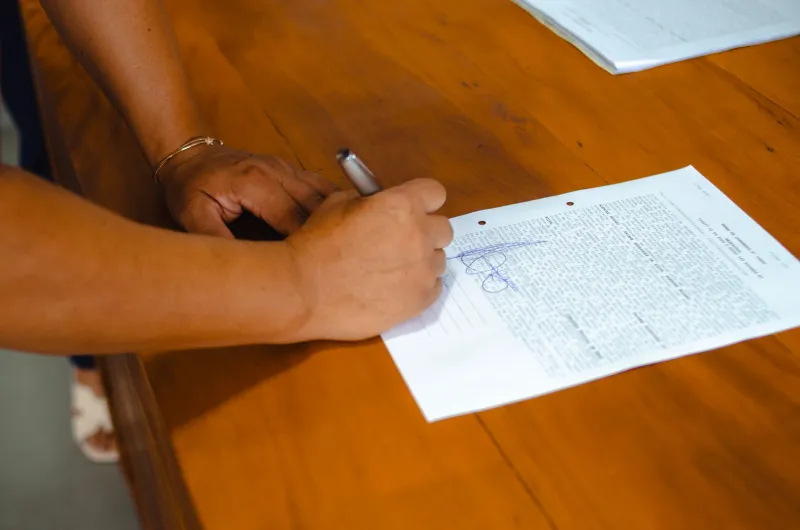
Keep the language simple. You don't need legalese — you need clarity. A shared Google Doc that both parties sign digitally through something like DocuSign is completely valid and takes about fifteen minutes to set up.
Templates and Resources Worth Bookmarking
You don't have to build this from scratch. Several music industry organizations offer free or low-cost templates designed for independent artists:
- Volunteer Lawyers for the Arts (VLA) has chapters across the US and offers free legal consultations for artists who qualify.
- ASCAP and BMI both have resources on their websites about co-publishing agreements and how to register joint works.
- Berklee Online has published free guides on music contracts that are written in plain English.
- Musicbed and Artlist — if you're licensing your music through these platforms, they have specific terms about co-ownership that your agreement should address.
For anything involving significant money — a sync deal, a label contract, or a major commercial license — it's worth paying a music attorney to review what you've drafted. Many will do a flat-fee review for a few hundred dollars, which is a bargain compared to losing thousands in a dispute.
The Agreement Is an Act of Respect
Here's the thing about putting your collaboration in writing: it signals that you take the work seriously. It says you believe what you're creating together has real value. It tells your collaborator that you respect their contribution enough to formalize it.
The artists who treat their craft like a business — without losing the soul of why they create — are the ones who build sustainable careers. Protecting your work isn't the opposite of being a creative person. It's what allows you to keep creating without constantly looking over your shoulder.
Write the agreement. Have the conversation. Sign the document. Then go make something incredible together.