Too Many Cooks, One Ruined Song: How Over-Collaboration Is Quietly Killing Your Creative Vision
You started with something that felt electric. A hook that came to you at 2am, a chord progression that made your chest tight, a lyric so honest it was almost embarrassing. You knew what the song was supposed to be. And then you made the mistake of asking everyone what they thought.
Six weeks later, the tempo is different, the key has shifted, the bridge you loved got cut, and somehow there's now a feature on the track that you don't even fully understand. You play it back and feel nothing. The song is technically fine. Everyone who touched it approved it. And it sounds exactly like nothing you ever wanted to make.
This is the collaboration trap. And it's more common than people admit.
The Psychology Behind It
There's a reason artists fall into this pattern. Seeking input feels responsible. It feels humble. In a culture that celebrates community and co-creation, going it alone can feel arrogant — like you think you're above feedback. So you share early, share often, and absorb every note like your career depends on it.
But here's what nobody talks about: there's a psychological cost to constantly outsourcing your creative judgment. Every time you override your instinct in favor of someone else's opinion, you're training yourself to trust your gut a little less. Do that enough times and you stop hearing your own voice clearly. You start second-guessing ideas before they're even fully formed.
Psychologists call this "decision fatigue by proxy" — not the exhaustion of making too many decisions yourself, but the exhaustion of trying to reconcile too many competing inputs from other people. For artists, it's particularly brutal because creativity isn't a democratic process. It was never meant to be.
When Collaboration Becomes a Committee
There's a difference between a collaborator and a stakeholder. A real collaborator brings something to the table — a skill set, a perspective, a sound that genuinely expands what you're making. A stakeholder just has opinions. And the entertainment world is full of people who've convinced themselves that having opinions qualifies as contribution.
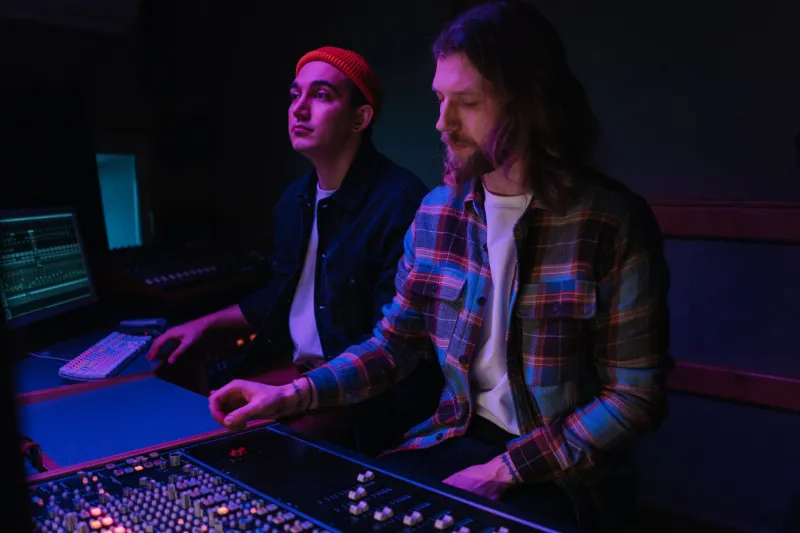
The trap usually looks like this: you write something, then you play it for a producer, a manager, a few trusted friends, maybe a mentor or two. Each person means well. Each piece of feedback is reasonable in isolation. But by the time you've incorporated all of it, you've made a song by committee — and committee-approved art is, almost universally, forgettable.
Think about some of the most iconic records in American music history. Joni Mitchell's Blue. Kendrick Lamar's good kid, m.A.A.d city. Phoebe Bridgers' Punisher. These weren't albums that went through fifteen rounds of notes. They were albums where someone had a clear vision and protected it. The collaborations that did happen on those records served the vision — they didn't dilute it.
Real Artists, Real Costs
Talk to enough independent artists and you'll hear some version of the same story. A singer-songwriter in Nashville spends eight months recording an album, gets feedback from her label, her producer, her management team, and three different A&R consultants. By the time it releases, she doesn't recognize herself in it. The press calls it "polished." She calls it "the album I had to make to get out of that deal."
Or consider the producer in LA who co-writes a track with a newer artist, only to watch it get reworked by three other producers, a vocal coach, and a brand consultant hired by the artist's team. The original idea — raw, strange, genuinely interesting — gets sanded down into something safe enough to pitch to sync licensing. It gets placed in a car commercial. Nobody's proud of it.
These aren't cautionary tales about bad collaborators. They're stories about what happens when the process itself becomes the enemy of the work.
How to Know When You've Gone Too Far
Here are a few honest signals that over-collaboration has taken hold:
You can't remember what you originally wanted. If you've lost the thread of your initial intention, the process has gone too long.
Every note feels equally important. When you can't prioritize feedback — when your manager's opinion carries the same weight as your co-writer's — you've lost your editorial authority over your own work.
You're relieved when people like it, not excited. Relief is the emotion of someone who's been seeking approval. Excitement is the emotion of someone who made something they believe in.
The work feels safe. Safe is the enemy of memorable. If nothing about the final product makes you even slightly nervous, something got lost.
A Framework for Protecting Your Vision
None of this means you should create in total isolation or reject feedback wholesale. It means you need a system for when collaboration serves the work versus when it starts consuming it.
Set a feedback window, not an open door. Decide early who gets input and when. Once that window closes, it closes. Late-stage feedback — especially from people who weren't involved from the start — should require a very high bar to actually change anything.
Separate technical feedback from creative feedback. A mixing engineer telling you the low end is muddy is technical feedback. Someone telling you the song needs to be more "accessible" is creative feedback. Treat them differently. Technical notes are often worth acting on. Creative notes require you to ask: does this serve my vision, or does it serve someone else's comfort level?
Create a first draft in complete isolation. Before you show anything to anyone, make something you'd be willing to defend. Know what it is. Know why you made it. That clarity becomes your anchor when the feedback starts rolling in.
Get comfortable saying "I hear you, and I'm going to keep it as is." This is a skill. Practice it. The people who genuinely respect your work will respect that answer. The ones who don't probably weren't the right collaborators anyway.
Trusting Yourself Is the Work
At the end of the day, the most important creative muscle you can build isn't technical skill or networking ability or platform strategy. It's the ability to trust your own judgment — to know the difference between feedback that makes your work better and feedback that just makes it more palatable to more people.
More people isn't always the point. Sometimes the point is one song that cuts through completely, that says exactly what it needed to say, that sounds like no one else could have made it. That song doesn't come from a committee. It comes from someone who had a vision and held onto it long enough to see it through.
Protect that. Even when it's uncomfortable. Especially when it's uncomfortable.