Who's Actually in Your Corner? A Honest Look at the People Shaping Your Creative Work
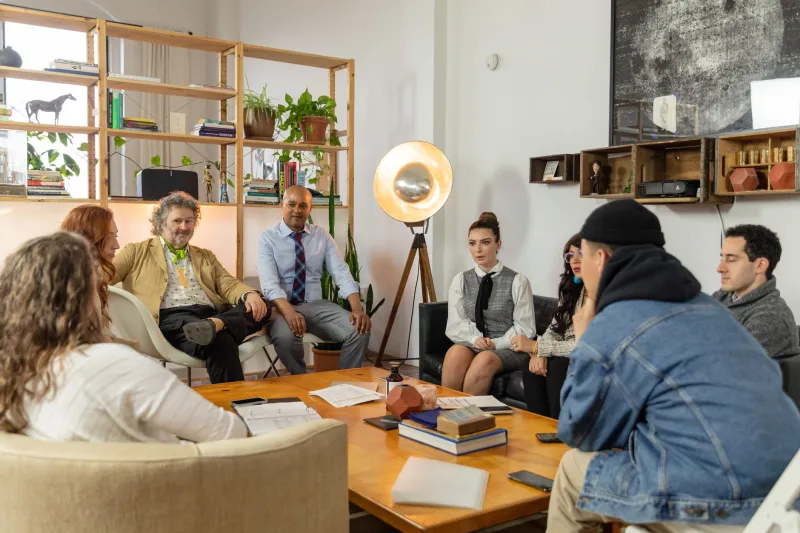
There's a version of this conversation nobody really wants to have with themselves. You're a few years into building something real — your sound has matured, your vision has sharpened, your goals have shifted — and yet somehow you're still in the same group chat with the same producers, the same co-writers, the same "we should definitely do something together" people you connected with back when everything was still figuring itself out.
That's not a failure. That's just what happens when you grow and your professional relationships don't automatically grow with you. The hard part is actually stopping to notice.
This is what a collaboration audit is. Not a dramatic purge of everyone you've ever worked with. Not a cold business calculation that strips the humanity out of creative partnerships. It's just an honest, periodic check-in with yourself about whether the infrastructure of people around your work is still serving the artist you're becoming — not just the one you used to be.
Why Most Artists Skip This Step
Loyalty is a real thing in creative communities, and it should be. When someone believed in you early, rode through the messy middle with you, showed up when the sessions ran long and the results were uncertain — that matters. It leaves a mark.
But loyalty and alignment aren't the same thing. You can deeply respect someone's talent and history with you while also recognizing that the direction you're heading and the direction they're heading have quietly diverged. Most artists avoid this realization because sitting with it feels like betrayal. So instead, they keep booking the same producer out of habit, keep looping in the same co-writer even when the energy feels flat, keep saying yes to features that don't quite fit anymore.
The cost of that avoidance isn't always obvious. It shows up as creative stagnation that you can't quite name. Sessions that feel fine but not electric. A body of work that sounds technically solid but doesn't feel fully like you.
What a Real Audit Actually Looks Like
Start by making a list — seriously, write it down — of every person you work with regularly in a creative capacity. Producers, co-writers, mixing engineers, creative directors, visual collaborators, the friend who always gives you feedback before a release. Anyone whose input or involvement shapes what you put out.
Then, for each person, ask yourself a few honest questions:
Does this person understand where I'm trying to go? Not where I've been, not where I was two years ago. Right now, today, does this person get the vision?
Do our sessions generate energy or drain it? There's a difference between a challenging collaboration that pushes you and one that leaves you exhausted without a good reason. Pay attention to how you feel leaving a session versus how you feel walking in.
Am I bringing my full creative self into this relationship? Sometimes we unconsciously shrink around certain collaborators — editing ideas before we even voice them, second-guessing instincts because of the dynamic. If you're not showing up fully, that's information.
Is this relationship reciprocal? Not transactionally equal, but genuinely mutual. Does this person invest in your growth the way you invest in theirs?
You don't need every answer to be a glowing yes. Every creative relationship has friction and seasons. But if you're getting consistent nos across the board for someone, that's worth sitting with.
Having the Hard Conversations Without Burning It Down
Here's where a lot of people freeze. You've done the audit, you've been honest with yourself, and you've realized that a relationship that used to be central to your work has quietly become peripheral — or worse, actively misaligned. Now what?
First, not every creative drift requires a formal conversation. Sometimes the natural thing is just to gradually shift your focus and energy toward the collaborations that are working. You don't always owe someone a breakup speech for a working relationship that's simply run its course. Spacing out the sessions, being more selective about what you bring to them, being honest when a new direction calls for a different kind of input — that's a legitimate, low-drama way to let something evolve.
But sometimes a real conversation is the right call, especially with someone you've worked closely with for a long time. And that conversation doesn't have to be brutal. You can be honest about your creative evolution without framing it as a rejection of the person. Something like: "I've been thinking about where I want to take this next project, and I think I need to try some new approaches. I value everything we've built together — this feels like a natural moment for me to stretch in a different direction."
That's not a betrayal. That's maturity. The people worth keeping in your life long-term will understand it, even if it stings a little in the moment.
Making Room for What's Next
There's a practical side to this too. When you're honest about which relationships are no longer serving your creative work, you free up real resources — time, energy, creative bandwidth, studio budget — to invest in the collaborations that actually light you up.
That might mean seeking out producers who are working in the sonic territory you want to explore. It might mean being intentional about co-writing with people who challenge your lyrical instincts rather than just validating them. It might mean bringing in a creative director or visual collaborator who pushes your visual identity forward instead of recycling the same aesthetic.
The artists who sustain long careers aren't the ones who stay loyal to the same circle forever. They're the ones who know how to honor what they've built while staying genuinely open to what they haven't built yet.
The Audit Isn't a One-Time Thing
This isn't a box you check once and move on from. The most useful version of a collaboration audit is a recurring practice — maybe once a year, maybe at the start of a new project cycle. Every time your vision shifts, it's worth asking whether the people around that vision are still the right ones to help you execute it.
Your creative circle is a living thing. It should evolve as you do. The goal isn't to build a permanent inner sanctum of approved collaborators — it's to stay honest about who's actually helping you make your best work, and to keep making room for that to change.
That kind of honesty, with yourself and eventually with the people you work with, is one of the most underrated creative skills there is.